
AI in Education: Empowering Young Minds Through Technology
Artificial Intelligence (AI) is transforming the way students learn, think, and create in today’s digital world. ICT lessons from Nursery to Grade 5, has an exciting range of AI tools that spark curiosity, enhance problem-solving, and support personalized learning experiences. Whether it’s through voice assistants, interactive AI games, or beginner-friendly machine learning activities, students continue developing a strong foundation in digital literacy and computational thinking. By integrating AI into the ICT curriculum, the school is preparing learners to be confident, creative, and responsible users of technology in a rapidly evolving world.
EARLY YEARS
Puppet Pals HD is an engaging iPad app that allows students to create and narrate their own animated stories using characters and settings of their choice. While using this digital tool, Nursery students explored their creativity by designing simple storylines and bringing them to life through voice recordings and animations. Through this activity, they developed key Approaches to Learning (ATL) skills for communication, as they expressed their ideas clearly; social skills, by collaborating and sharing roles; and thinking skills, by sequencing events and making choices to shape their stories.
BROWSE LINKS – Advika Saini
Code-a-Pillar is a fun and interactive coding app that introduced young learners to the basics of programming using engaging gameplay. During this activity, students practiced sequencing by arranging blocks of code to guide the character’s movement, helping them understand cause and effect in a playful context. This experience supported the development of problem-solving and computational thinking skills, as students planned, tested, and adjusted their sequences to achieve specific outcomes.
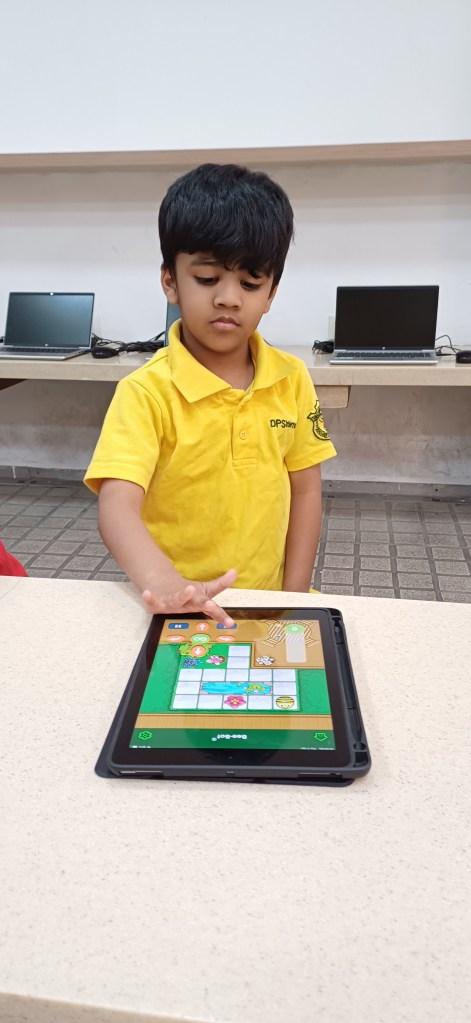
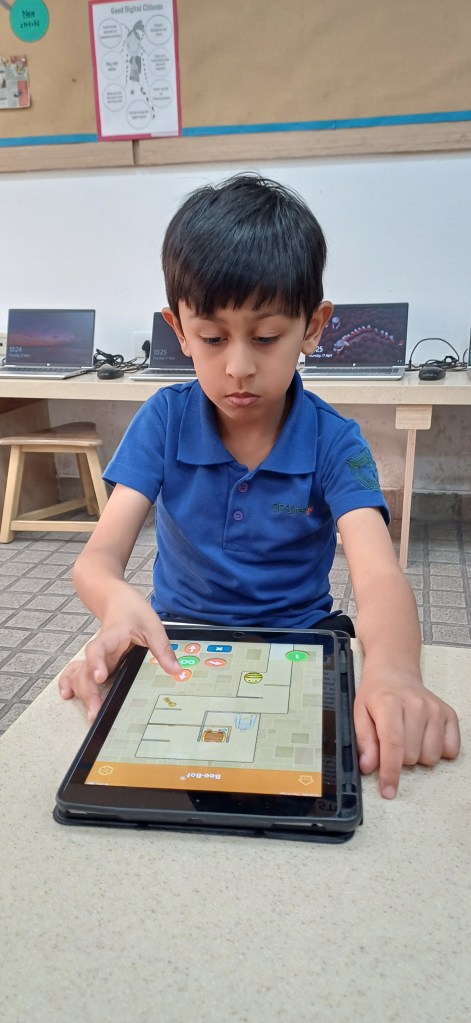

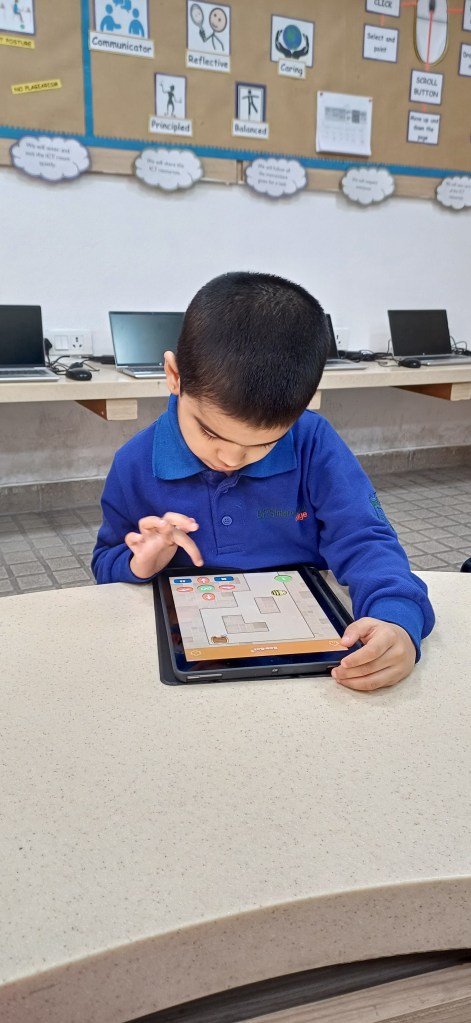

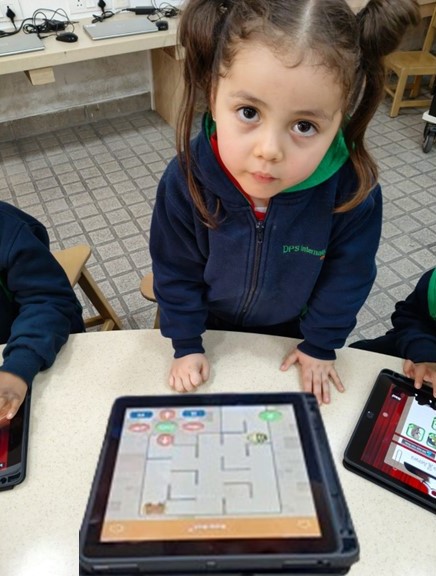

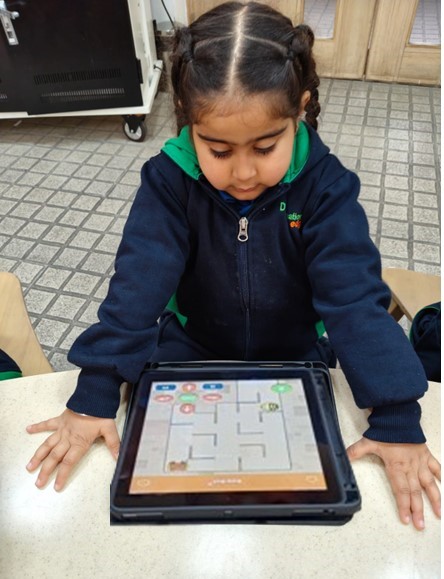
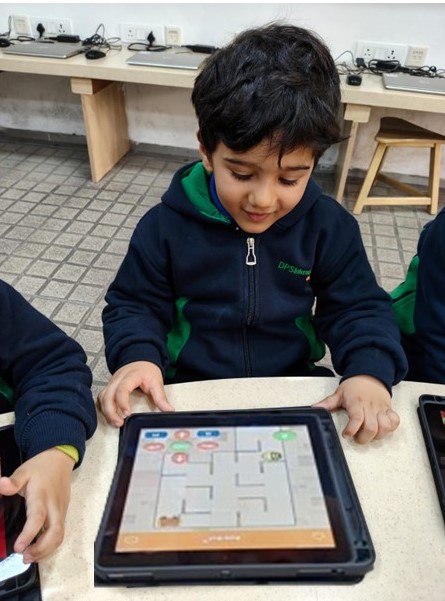


Students were taught coding with the use of floor robot named ‘Bee-Bot’. They learned how to control it by using directional keys, enabling it to move forward, backward, and turn at 90-degree angles to the left and right. Students were given progressively challenging problems as they advanced, which promoted the growth of their computational and critical thinking skills. Through this playful approach, they developed skills of sequencing, estimation, and problem-solving.
GRADE 1 to 3




AutoDraw is a web-based tool by Google that uses machine learning to quickly create drawings. Grade 1 students created rough sketches using features to guess what they meant, and suggested polished clipart-style versions to replace the sketch.
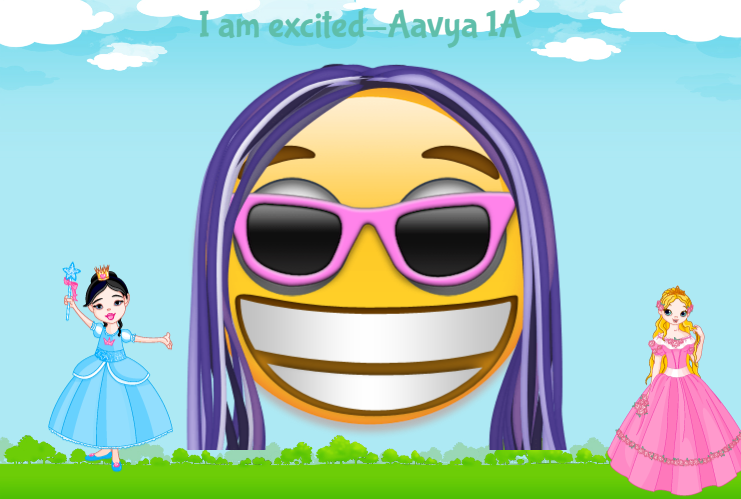


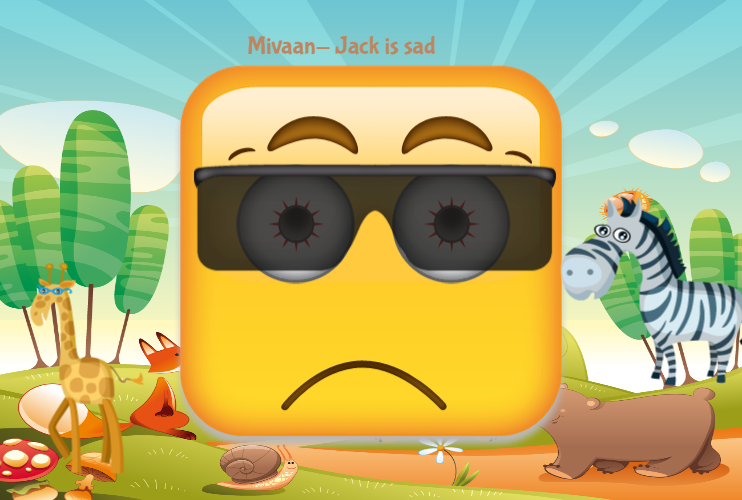

Students worked on an online creative tool to design and customize their own emojis. They mixed and matched a variety of facial expressions, accessories, and unique features to produce emojis tailored to reflect feelings. They chose different expressions and styles to reflect skills of creative thinking, decision making and hand-eye coordination with drag and drop emoji features.
Scratch Junior is a fun and easy visual programming app that introduced young learners of grade 2 to the world of coding. Using a variety of blocks such as trigger, motion, looks, and control blocks, students created simple animations and interactive stories. This hands-on activity helped them build foundational coding skills while enhancing their logical thinking and problem-solving abilities through experimentation and exploration.
BROWSE LINKS- Advika Narang
QuickDraw is an AI-powered drawing game that uses machine learning to guess what users are sketching in real-time. Students were introduced to Artificial Intelligence (AI) through this interactive tool, gaining insights into how AI processes visual data and recognizing both its capabilities and limitations.
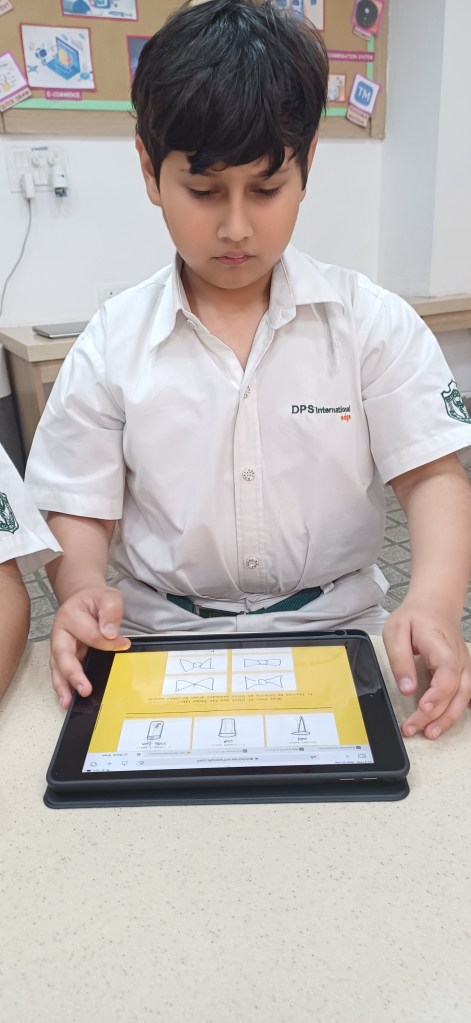
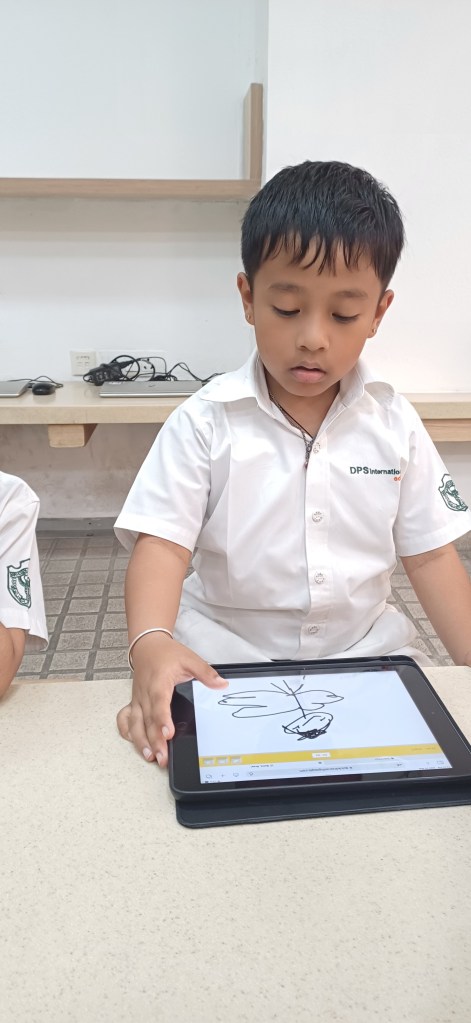

AI for Oceans is a Code.org activity where students help train an AI model to identify fish and trash, demonstrating how AI can be used to solve real-world problems. Grade 3 students were introduced to the concept of Artificial Intelligence and its real-life applications by training, testing, and improving an AI model to recognize objects in the ocean through interactive coding tasks.
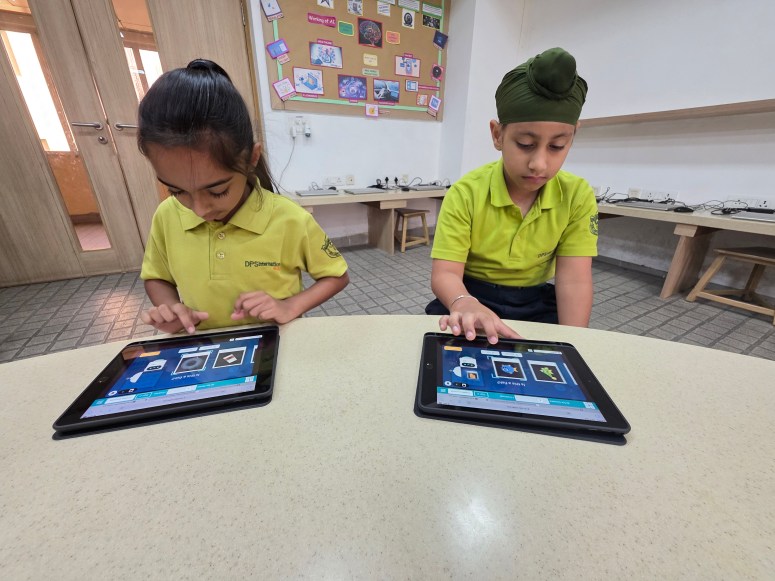

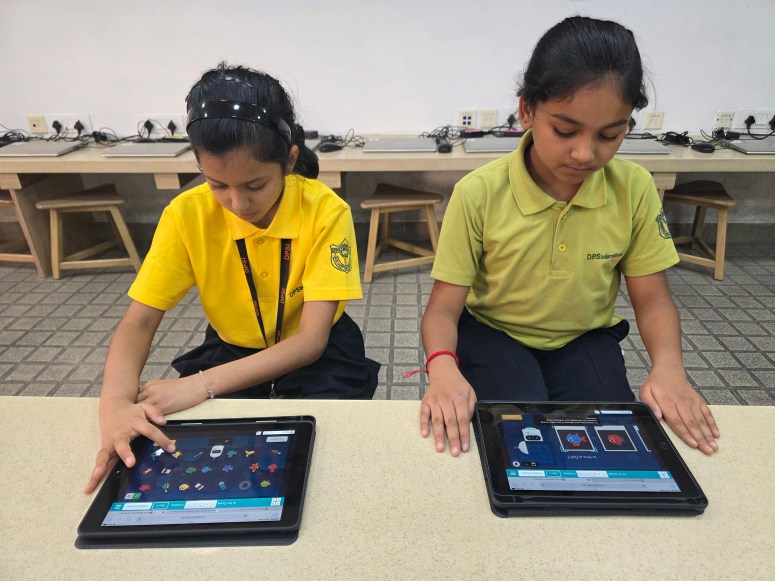
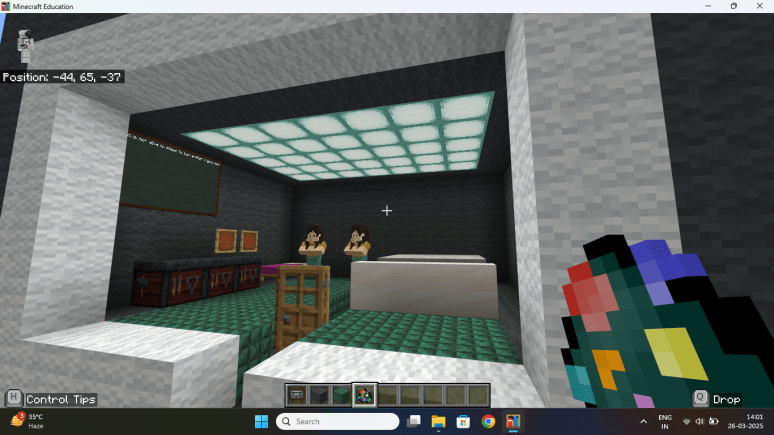
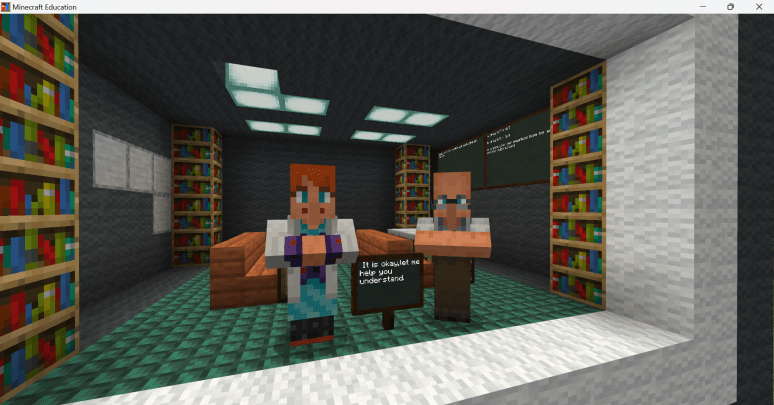
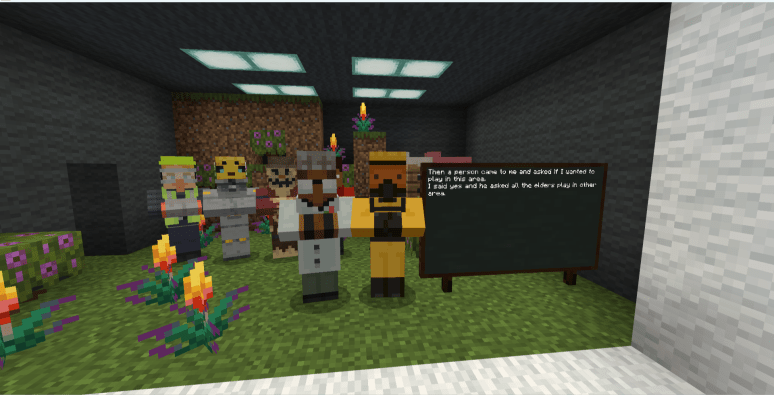
Students explored the virtual world of Minecraft, learning to break and place blocks while mastering mouse and keyboard control. They developed foundational building skills that enhanced their spatial awareness, fine motor skills, and problem-solving abilities. As a creative challenge, students built a world themed around gratitude, using blocks from the inventory and adding signboards to share problems and solutions.

GRADE 4 and 5
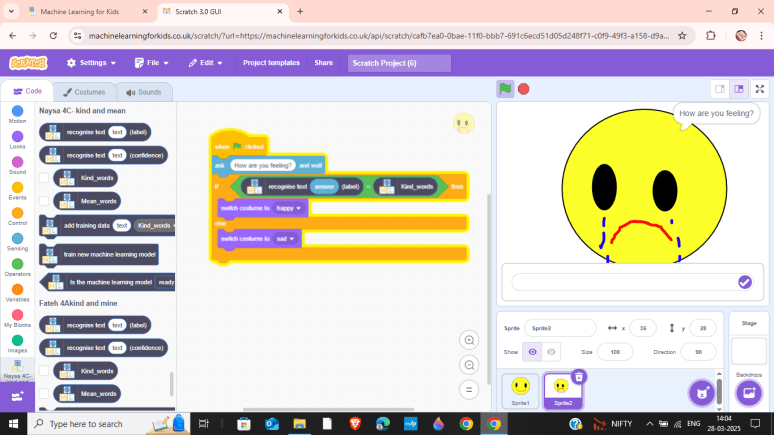

Using Scratch along with Teachable Machine, students of Grade 4 integrated machine learning into their projects by training models to recognize inputs such as text, images, or sounds. They explored the working of machine learning by teaching the computer to respond differently based on the input it received thereby making their projects interactive and intelligent.

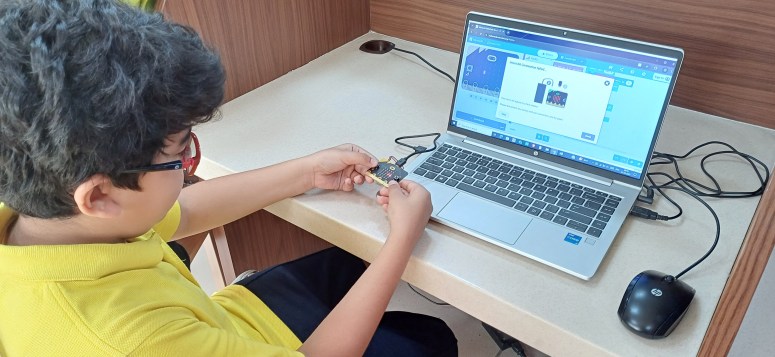
Micro:bit is a programmable device that introduces students to the fundamentals of coding and electronics. Students explored coding with Micro:bit using the MakeCode platform, applying loops and conditionals to create more efficient and dynamic programs. This hands-on activity boosted their problem-solving, logical thinking, and decision-making skills as they coded with purpose and creativity.
BROWSE LINKS – stepcounter
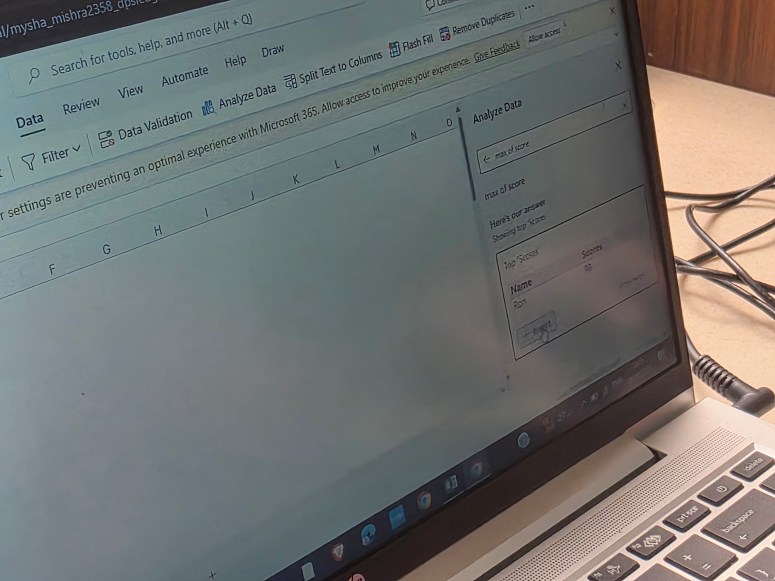

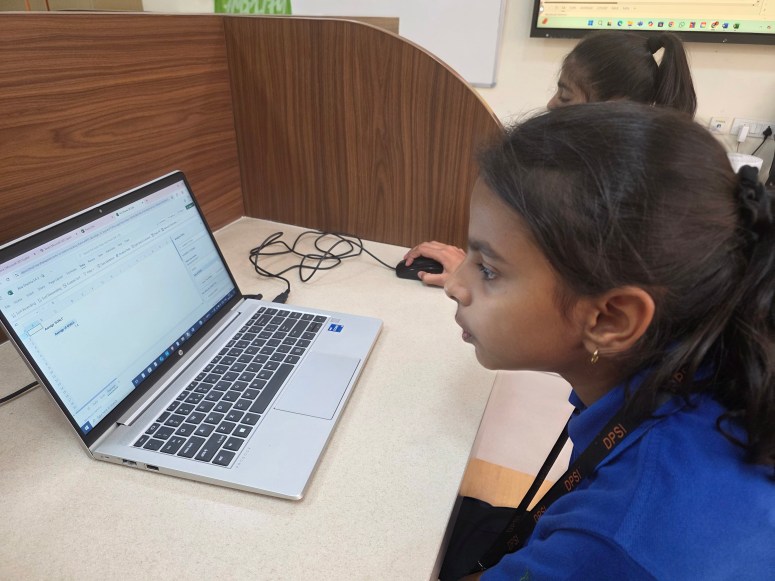

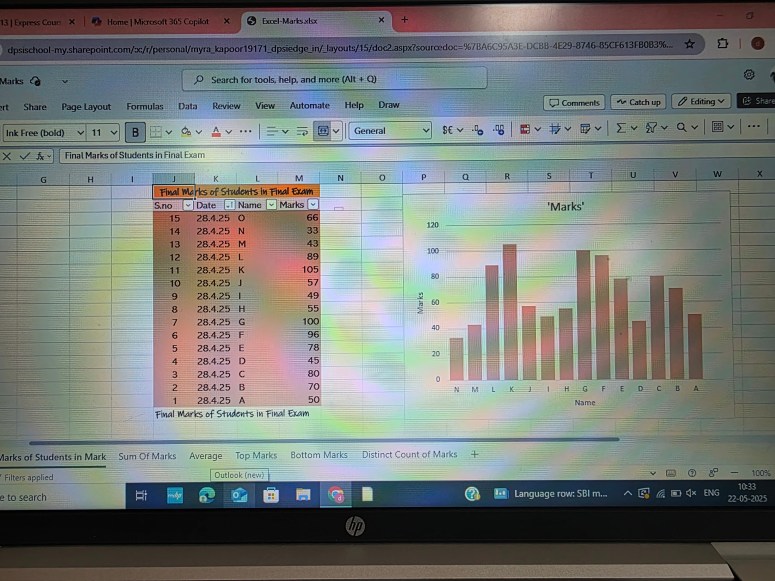
Analyze Data in Excel is a built-in feature that uses AI to automatically provide insights from the spreadsheet data. Grade 5 students used the feature to find the sum, average, max and min values.


In conclusion, over six months, primary students have effectively explored AI in ICT lessons, enhancing creativity, problem-solving, and digital confidence. As AI evolves, these early experiences will prepare them to adapt, think critically, and use technology responsibly-skills essential for future learning, innovation, and success in an increasingly AI-driven world.
 Tech-Dawn